
When ex-Tropical Cyclone Alfred crawled toward the southeast Queensland coast in early March 2025, most of the coverage focused on the wind, the blackouts, and the flooded streets. The slower story showed up weeks later, on the walls of houses across Brisbane.
Alfred was the first system of its kind to reach this far south in half a century. It stalled offshore for days before it crossed, and that lingering meant the rain did not arrive and leave. It sat.
At Lower Springbrook in the hinterland behind the Gold Coast, gauges recorded 814 millimetres over roughly a week, close to four-fifths of Brisbane’s average annual rainfall in a handful of days. Brisbane itself logged its wettest 24 hours since 1974.
That kind of saturation does not just flood gutters. It feeds everything that grows on a surface and waits for moisture.
Why Subtropical Walls Turn Green After a Wet Event
Brisbane sits in a subtropical zone, which means warm air and high humidity for much of the year. Add a prolonged soaking on top of that and you create close to ideal conditions for mould, mildew, lichen, and algae.
These organisms are not picky. They colonise rendered walls, painted weatherboard, fibre cement sheeting, roof tiles, eaves, fences, and the shaded southern side of almost any structure.
The green and black film that appears is living matter, not loose dirt. That distinction matters, because it changes how the surface has to be treated.
A garden hose moves the spores around. It does not remove the biological root structure that anchors into the surface, which is why a quick rinse tends to look clean for a fortnight and then darkens again.
After Alfred, plenty of homeowners discovered this the hard way. Surfaces that had looked fine for years suddenly carried a visible bloom, and the usual weekend rinse did almost nothing.
The Difference Between Blasting and Treating
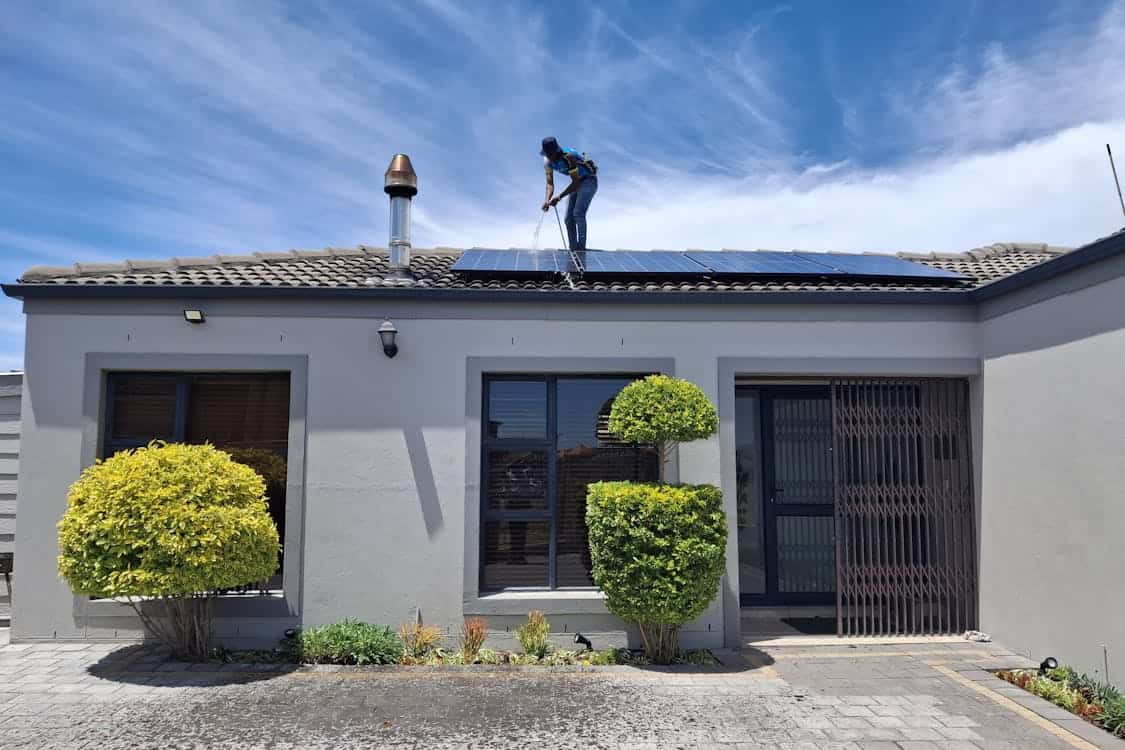
There is a popular assumption that more pressure equals a better result. On a delicate surface, the opposite is often true.
High pressure aimed at painted timber, soft render, or older roof coatings can strip paint, drive water behind cladding, and lift sealant. The surface looks clean for a moment and then ages faster than it should.
This is where the trade has shifted toward soft washing for the more fragile parts of a home. Soft washing uses lower pressure paired with cleaning solutions that break down the organic growth at the root, so the surface stays clean for longer.
Hard surfaces are a different matter. Driveways, concrete paths, and tiled patios can take genuine pressure, which is why most operators carry a range of equipment rather than one machine set to maximum.
For Brisbane homeowners weighing up exterior pressure cleaning after a wet stretch, the deciding factor is usually matching the method to the material rather than chasing the highest pressure rating on the quote.
A competent operator reads the surface first. A two-storey Queenslander with painted weatherboard gets handled very differently from a brick-and-tile project home, and the equipment choice reflects that.
Timing the Clean Around the Weather
One quiet lesson from the 2025 season was about timing. Cleaning a wall in the middle of a wet run is close to pointless, because the growth returns almost as fast as it is removed.
The better window tends to open as the humidity drops heading into the cooler, drier months. Treating a surface then gives it a longer clean stretch before the next wet season arrives.
There is also a maintenance argument that goes beyond appearance. Lichen and moss hold moisture against a surface, and over years that constant dampness can degrade paint, grout, and roof coatings.
Removing the growth is partly cosmetic and partly protective. A clean, dry surface simply lasts longer than one carrying a permanent layer of damp organic matter.
Insurers and assessors logged tens of thousands of claims in the weeks after Alfred, a reminder of how much water moved through the region. Most of those claims were structural, but the residue left behind on exteriors was a slower, quieter cost that landed on ordinary households.
Brisbane will see wet years again. The pattern of warm, humid air sitting over a coastal city does not change, and neither does what that does to the outside of a house.
The practical takeaway from the last big event is simple enough. Match the method to the surface, time the work for the drier months, and treat the growth at the root rather than rinsing the symptom.