
A September 2026 welding award for ADNOC’s P5 Habshan project highlights how one sour-service pipeline can require two very different material systems. Qapqa will provide automatic welding services for approximately 20 kilometres of large-diameter pipe in the United Arab Emirates. The scope includes 48-inch carbon steel and 36-inch corrosion-resistant-alloy clad pipe.
The published project details identify 23.83-millimetre wall carbon steel alongside API 5L X52 pipe clad with Alloy 825, using 9.7 millimetres of steel plus 3 millimetres of alloy. The contractor describes the work as a Habshan sour-service pipeline project.
Sour service changes the failure question
In environments containing wet hydrogen sulfide, ordinary strength calculations are not enough. Material hardness, microstructure, stress and environmental severity can combine to create cracking risks that are absent in sweet service. NACE Pipe should therefore be treated as a service-specific requirement, not just a general note on the requisition.
The engineering basis should identify hydrogen sulfide exposure, operating temperature, pH, chlorides, pressure and expected upset conditions. It should then connect those inputs to material selection, welding controls, hardness limits and qualification testing. The term “NACE compliant” is too broad unless the order states the governing document, edition and applicable limits.
Clad pipe moves attention to the weld
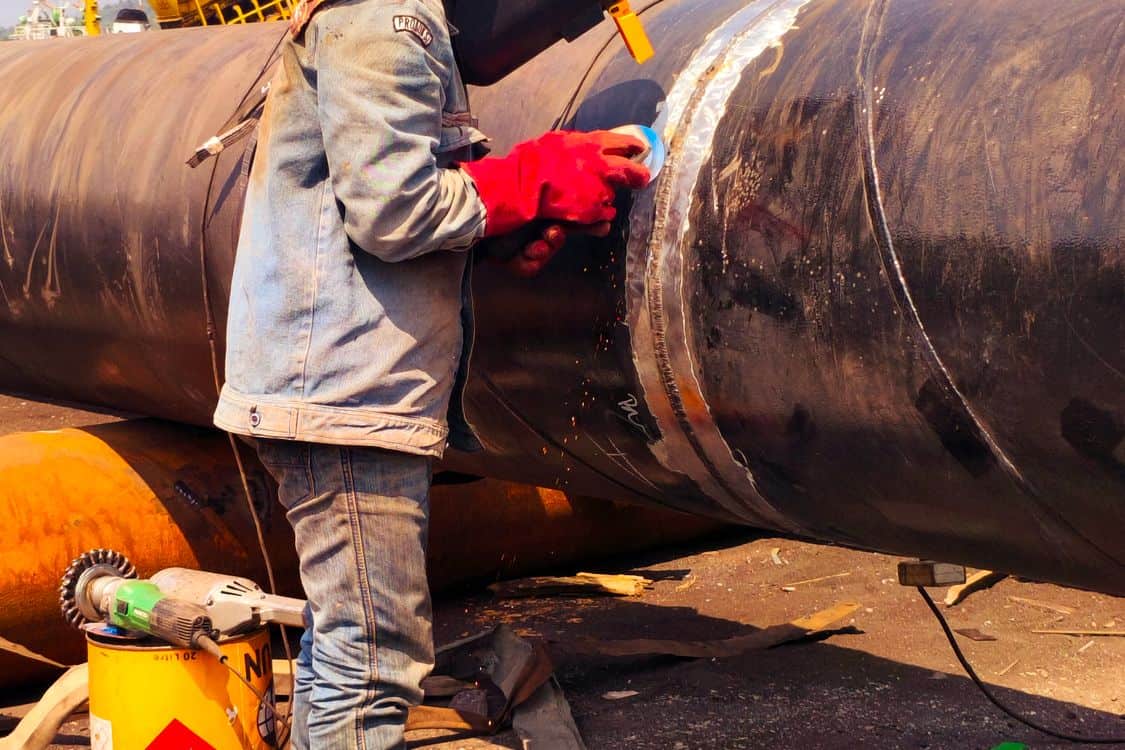
Alloy 825 cladding places corrosion resistance where it is most useful while the carbon-steel backing carries structural load. Joining it, however, requires control of alignment, dilution, consumables and the internal corrosion-resistant surface. Automatic welding can improve repeatability, but the procedure still has to demonstrate sound performance for the actual pipe combination and production conditions.
The Habshan contract makes the procurement lesson visible. Sour-service integrity depends on the pipe, clad layer, weld procedure, inspection plan and operating environment acting as one system. Specifying a material without controlling the interfaces between those elements leaves the most important risk unresolved.
For the carbon-steel section, control of hardness and heat-affected-zone properties is especially important. Welding variables such as heat input, preheat, interpass temperature and consumable selection can alter the local microstructure. Production procedures should therefore reproduce the conditions used in qualification rather than treating the approved procedure as a broad permission.
Clad pipe adds a second set of concerns. The corrosion-resistant layer must remain continuous through the joint, and the completed internal surface should not create crevices or exposed carbon steel. Inspection may combine conventional weld examination with checks focused on the alloy layer, depending on the joint design and project requirements.
Qualification should mirror production
Automatic welding equipment can deliver repeatable travel speed, wire feed and torch position, but repeatability only helps when the starting parameters are correct. Procedure qualification should use representative pipe, wall thickness, cladding and joint geometry. It should also account for repair welding, because a repair can create a different thermal history from the original pass sequence.
Field controls matter after qualification. Consumable storage, calibration, fit-up, cleanliness and operator responsibilities should be defined in the production plan. Data captured by the welding system can provide a useful record, but it does not replace visual inspection or the specified nondestructive examinations.
Owners should also connect materials decisions to operating limits. A pipeline qualified for one sour environment may not remain suitable if water chemistry, pressure or contaminant levels change. Monitoring and integrity management need to preserve the assumptions behind the original selection throughout service.
Documentation needs to link those controls from mill to completed weld. Pipe certificates, cladding records, welding data, inspection results and repair reports should use consistent identifiers. If an integrity team later investigates a location, it should be able to reconstruct the materials and production history without relying on disconnected contractor files.
The project’s mixed-material scope makes interface management particularly important. Transition locations, tie-ins and changes in welding sequence should be identified on drawings and in work packs. These are natural points for additional review because responsibilities, consumables or inspection techniques may change within a relatively short section of pipeline.